Saad Hariri and the future of his Future Movement
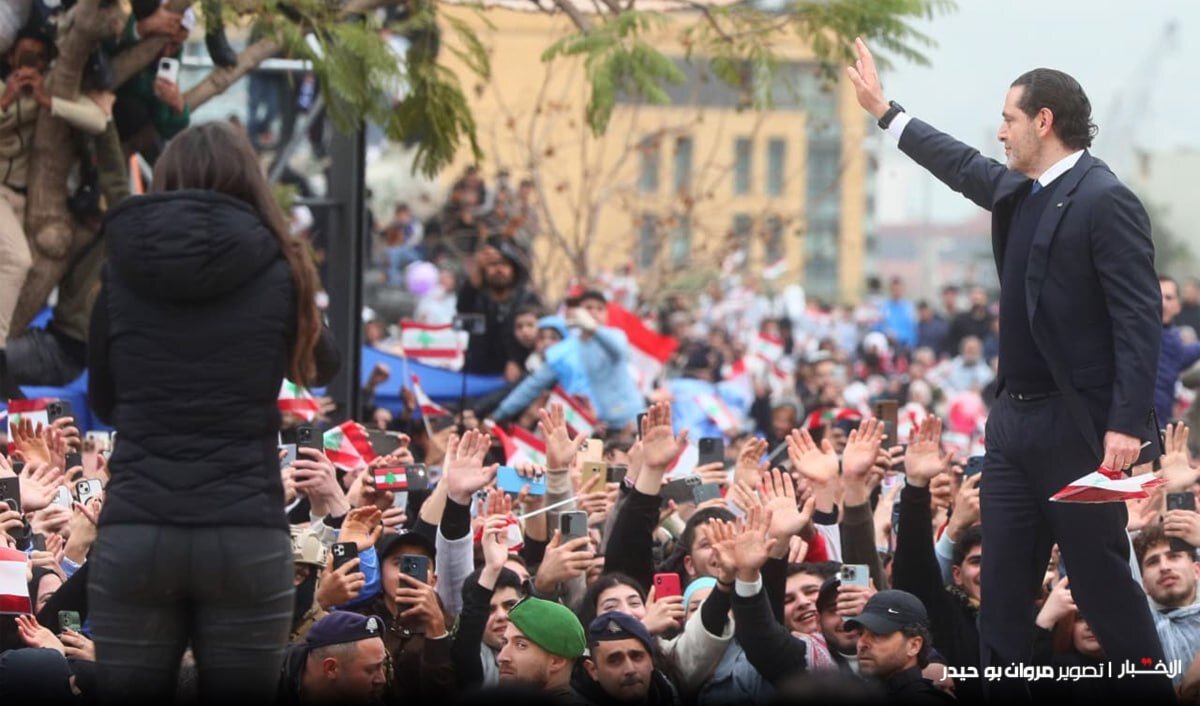
BEIRUT — On the 21st anniversary of the assassination of former Lebanese PM Rafic Hariri, thousands gathered in Beirut’s Martyrs’ Square in a scene that blended remembrance with political anticipation.
The commemoration, organized by the Future Movement, was not merely a tribute to a former leader, but a moment charged with questions about the movement’s future and its role within Lebanon’s shifting political landscape.
At the heart of the event stood Saad Hariri, whose long-awaited speech signaled a potential turning point.
Addressing supporters from across Lebanon, he reaffirmed that the Future Movement would participate in upcoming parliamentary elections whenever they are held.
Hariri’s words carried both defiance and reassurance, emphasizing that the political legacy of his father remains alive despite years of political withdrawal and mounting pressures.
His speech was deeply personal, as he responded to critics who, in his view, attempted to undermine or erase what is often referred to as “Harirism.”
Hariri insisted that stepping back from political life was not a retreat, but a refusal to cover failure or compromise on the state’s integrity.
“We stepped back, but we are still present,” he declared, portraying resilience in the face of what he described as betrayal and internal political attacks.
Beyond internal disputes, Hariri’s message extended to broader national concerns.
He stressed the importance of unity, rejecting sectarian conflict and reaffirming commitment to a “Lebanon First” vision.
Referencing the Taif Agreement, he criticized the incomplete implementation of its provisions, noting that selective application by political factions has prolonged Lebanon’s crises rather than resolving them.
Hariri also outlined key political demands: the exclusive possession of weapons by the state, administrative decentralization, the abolition of political sectarianism, and the establishment of a senate.
These proposals reflect longstanding pillars of the Future Movement’s platform, aimed at restoring institutional balance and governance.
However, the atmosphere surrounding the anniversary revealed a more complex reality.
In areas like Tariq al-Jadideh—a stronghold of Hariri’s popular base—the commemoration felt quieter than in previous years.
While older generations still recall the emotional intensity of 2005, younger Lebanese appear more detached, shaped by economic hardship rather than political loyalty.
Conversations in local cafés increasingly revolve around daily survival, signaling a shift from political mobilization to socio-economic concern.
Despite this, Hariri’s personal influence remains significant. Even as the movement’s organizational strength has declined, his leadership continues to serve as a unifying symbol for many supporters.
The Future Movement’s internal structures are now mobilizing once again, preparing for a possible electoral return that many within the party view as essential for political survival.
Behind the scenes, preparations are already underway. Electoral strategies, candidate lists, and potential alliances are reportedly being finalized, with an emphasis on maintaining a degree of independence from traditional political blocs.
The objective is clear: to secure a parliamentary presence capable of influencing the next government. Yet this anticipated return is not without challenges.
Financial constraints, reduced external support, and increasing political competition all pose serious obstacles.
Moreover, there are indications of external pressures aimed at limiting the movement’s resurgence, reflecting the broader regional dynamics that continue to shape Lebanese politics.
Ultimately, this year’s commemoration was more than an act of remembrance—it was a declaration of intent.
Between memory and political re-entry, Saad Hariri and the Future Movement stand at a crossroads. Their next steps will not only determine their own future, but also influence the balance of power within Lebanon’s fragmented political arena.
Leave a Comment